
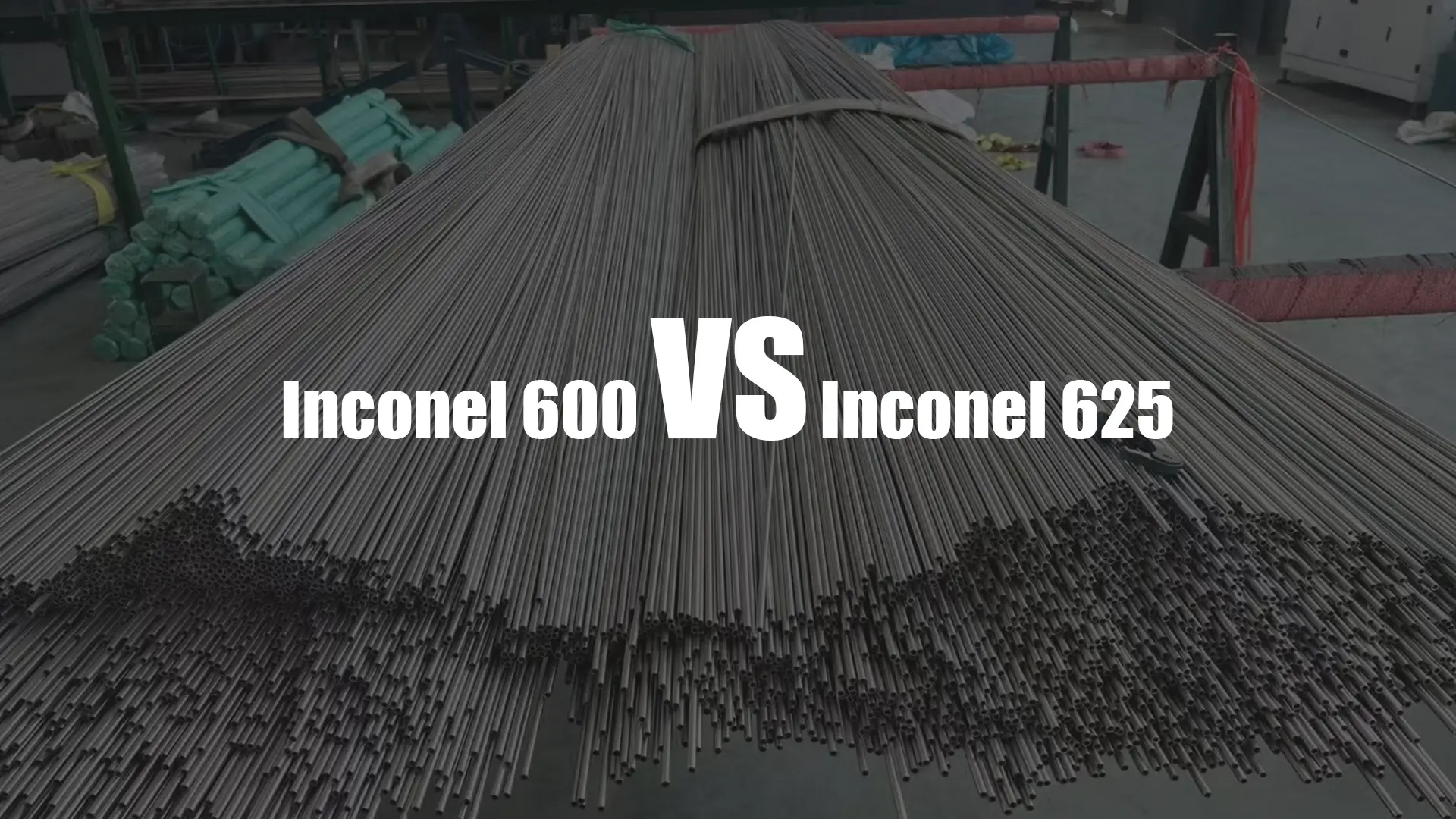
1. Overview: What Are Inconel 600 and Inconel 625?
Inconel 600 (UNS N06600) is a nickel-chromium-iron solid solution alloy developed for high-temperature and corrosion environments. It was one of the first Inconel grades produced and has earned a reputation for oxidation resistance and thermal stability. Common applications include furnace components, heat-exchanger tubing, industrial heaters, and chemical processing equipment.
Inconel 625 (UNS N06625) is a modified Inconel alloy that includes additional elements such as molybdenum (Mo) and niobium (Nb). These alloying elements significantly enhance the strength and corrosion resistance compared to Inconel 600. Inconel 625 is designed for more demanding corrosion and high-stress environments, making it popular in aerospace, marine, and chemical processing industries.
2. Chemical Composition: The Foundation of Performance
One of the most critical differences between Inconel 600 VS Inconel 625 lies in their chemical compositions. Composition directly influences mechanical strength, corrosion resistance, and thermal performance. The table below summarizes typical alloying ranges:
| Element | Inconel 600 | Inconel 625 |
|---|---|---|
| Nickel (Ni) | 72–76% | 58–63% |
| Chromium (Cr) | 14–17% | 20–23% |
| Iron (Fe) | 6–10% (balance) | Balance |
| Molybdenum (Mo) | — | 8–10% |
| Niobium (Nb) | — | 3.0–4.0% |
| Carbon (C) | ≤ 0.15% | ≤ 0.10% |
Inconel 600 has a higher nickel content, which contributes to its stability at elevated temperatures. In contrast, Inconel 625 contains significant amounts of molybdenum and niobium, which improve corrosion resistance and mechanical properties.
3. Mechanical Properties: Strength and Toughness
The mechanical performance of a material determines its suitability under load, stress, and extreme conditions. Here’s how Inconel 600 and Inconel 625 compare:
Tensile Strength and Yield Strength
| Property | Inconel 600 | Inconel 625 |
|---|---|---|
| Yield Strength | 200–310 MPa | 280–345 MPa |
| Ultimate Tensile Strength | 450–700 MPa | 700–1,200 MPa |
| Elongation (min) | ~30% | ~30% |
Inconel 625 consistently exhibits higher yield and tensile strengths due to the solid solution and precipitation strengthening effects from molybdenum and niobium. These additional elements make Inconel 625 significantly stronger than Inconel 600, especially under high mechanical loads.
Hardness and Ductility
Inconel 600 tends to have moderate hardness and good ductility, making it easier to form in certain applications. Inconel 625, while also ductile, is typically harder due to its alloying additions and may be more challenging to machine.
4. Corrosion Resistance: Protecting Against Degradation
Both alloys are designed for corrosion resistance, but the environments where each excels differ.
Inconel 600
Inconel 600 is known for its excellent general corrosion resistance and oxidation resistance at high temperatures. It performs well in environments where oxidation, carburization, and general corrosive exposure are concerns, particularly at elevated temperatures.
Inconel 625
Inconel 625 takes corrosion resistance to a higher level. The addition of molybdenum and niobium greatly improves resistance to pitting, crevice corrosion, and chloride stress-corrosion cracking, especially in aggressive chemical environments or marine conditions. Its higher chromium content also enhances resistance to oxidation.
In many applications, this makes Inconel 625 a more suitable choice when exposure to harsh chemicals, salts, and fluctuating temperatures is expected.
5. High-Temperature Performance
Inconel 600 and Inconel 625 are both engineered for high temperatures, but their performance profiles differ:
- Inconel 600 maintains structural integrity up to approximately 1093°C (2000°F), making it a preferred choice for continuous high-temperature applications such as furnace components and heat exchangers.
- Inconel 625 also performs well at elevated temperatures, with excellent oxidation resistance and thermal stability. While it has a lower maximum temperature limit in some specifications (around 982°C), its strength retention under cyclic temperatures is superior. This makes Inconel 625 ideal for aerospace and power generation components that experience frequent temperature fluctuations.
6. Fabrication: Machining and Welding
The ease of fabrication and welding is important in manufacturing environments:
- Machinability: Inconel 600 generally machines more readily than Inconel 625 because Inconel 625 work-hardens faster and contains higher amounts of alloying elements that reduce tool life.
- Weldability: Both alloys require proper procedures for welding, but Inconel 625 is often considered easier due to its stable microstructure and reduced susceptibility to cracking.
Overall, Inconel 625 may require more advanced tooling and careful machining strategies, but both materials can be successfully fabricated with the right techniques.
7. Typical Applications
Because of their distinct properties, the choice between Inconel 600 VS Inconel 625 often depends on application requirements:
Common Uses of Inconel 600:
- Furnace muffles and heat-treat baskets
- Industrial heaters and retorts
- Chemical processing equipment exposed to oxidation
- Nuclear engineering components
- Heat exchangers and piping where moderate corrosion resistance is adequate
Common Uses of Inconel 625:
- Chemical processing piping and vessels exposed to aggressive media
- Marine environments (offshore equipment and seawater systems)
- Aerospace fasteners, turbine components, and exhaust systems
- Power generation components
- Oil & gas extraction and processing equipment
These examples highlight how Inconel 600 is often chosen for thermal stability and oxidation resistance, while Inconel 625 shines in high-strength and highly corrosive environments.
8. Cost Considerations
Because Inconel 625 contains additional alloying elements such as molybdenum and niobium, it is typically more expensive than Inconel 600. The higher cost is justified in applications requiring enhanced performance, but for simpler high-temperature oxidation environments, Inconel 600 remains cost-effective.
9. Selection Guide: Which Alloy to Choose?
When deciding between Inconel 600 VS Inconel 625, consider the following questions:
- Will the component see high temperatures without severe corrosive media? If yes, Inconel 600 is often sufficient.
- Are strength and resistance to pitting or chloride corrosion priorities? If so, Inconel 625 is usually the better choice.
- Is fabrication complexity or tool cost a concern? Inconel 600 typically machines more easily, potentially lowering manufacturing costs.
10. Conclusion
The comparison of Inconel 600 VS Inconel 625 reveals two powerful nickel-based alloys with different strengths:
- Inconel 600 delivers excellent high-temperature oxidation resistance, thermal stability, and general corrosion resistance, making it ideal for heat-intensive environments.
- Inconel 625 offers enhanced mechanical strength, superior corrosion resistance, and excellent performance under cyclic thermal and corrosive conditions, justifying its higher cost in demanding applications.
In selecting the right material, engineers must evaluate application requirements, environmental conditions, and performance goals. Whether for aerospace, chemical processing, marine systems, or industrial furnaces, Inconel 600 and Inconel 625 remain among the most reliable superalloys available today.
Pingback: viagra kilimall
Pingback: super vidalista 100mg
Pingback: cenforce 100mg reddit
Pingback: stendra vs viagra
Pingback: zudena
Pingback: avanafil online canada
Pingback: tirzepatide vs semaglutide cardiovascular
Pingback: semaglutid receptfritt tabletter
Pingback: semaglutida injetável o que é
Pingback: propecia amazon
Pingback: levitra generic canada
Pingback: proscar medication use
Pingback: doxycycline hyclate 100mg crush
Pingback: doxycycline for bacterial meningitis
Pingback: doxycycline 100mg for acne reviews
Pingback: tadalafil 10mg amazon
Pingback: minoxidil walgreens price
Pingback: bupropion hcl er sr 200mg
Pingback: who makes generic liraglutide
Pingback: how does orlistat
Pingback: terbinafine side effects reference
Pingback: acular ketorolac quick overview
Pingback: ketoconazole indication expert guide
Pingback: ketorolac tromethamine drug info
Pingback: terbinafine for fungal nails
Pingback: toradol pain therapy
Pingback: ivermectin guide FAQ
Pingback: ivermectin demodex clinical data
Pingback: ivermectin scabies medical overview
Pingback: ivermectin mechanism in demodex
Pingback: minoxidil 2% vs 5% structured guide
Pingback: minoxidil foam vs liquid pros and cons
Pingback: minoxidil mechanism deep dive
Pingback: minoxidil pk parameters
Pingback: minoxidil women’s full overview
Pingback: sildenafil do‑not‑combine list
Pingback: sildenafil ED mechanism
Pingback: avanafil contraindication profile
Pingback: vardenafil 5 mg tablet analysis
Pingback: vardenafil vs sildenafil comparison notes
Pingback: augmentin medical description
Pingback: amoxicillin and other drugs
Pingback: Sildenafil PK Overview
Pingback: PKDuration
Pingback: Sildenafil Onset Information
Pingback: Sildenafil vs vardenafil duration comparison
Pingback: Viagra vs sildenafil differences
Pingback: how sildenafil acts
Pingback: comparison of sildenafil and tadalafil
Pingback: sildenafil explained
Pingback: tadalafil interaction warnings
Pingback: TadalafilCentral telehealth guide