
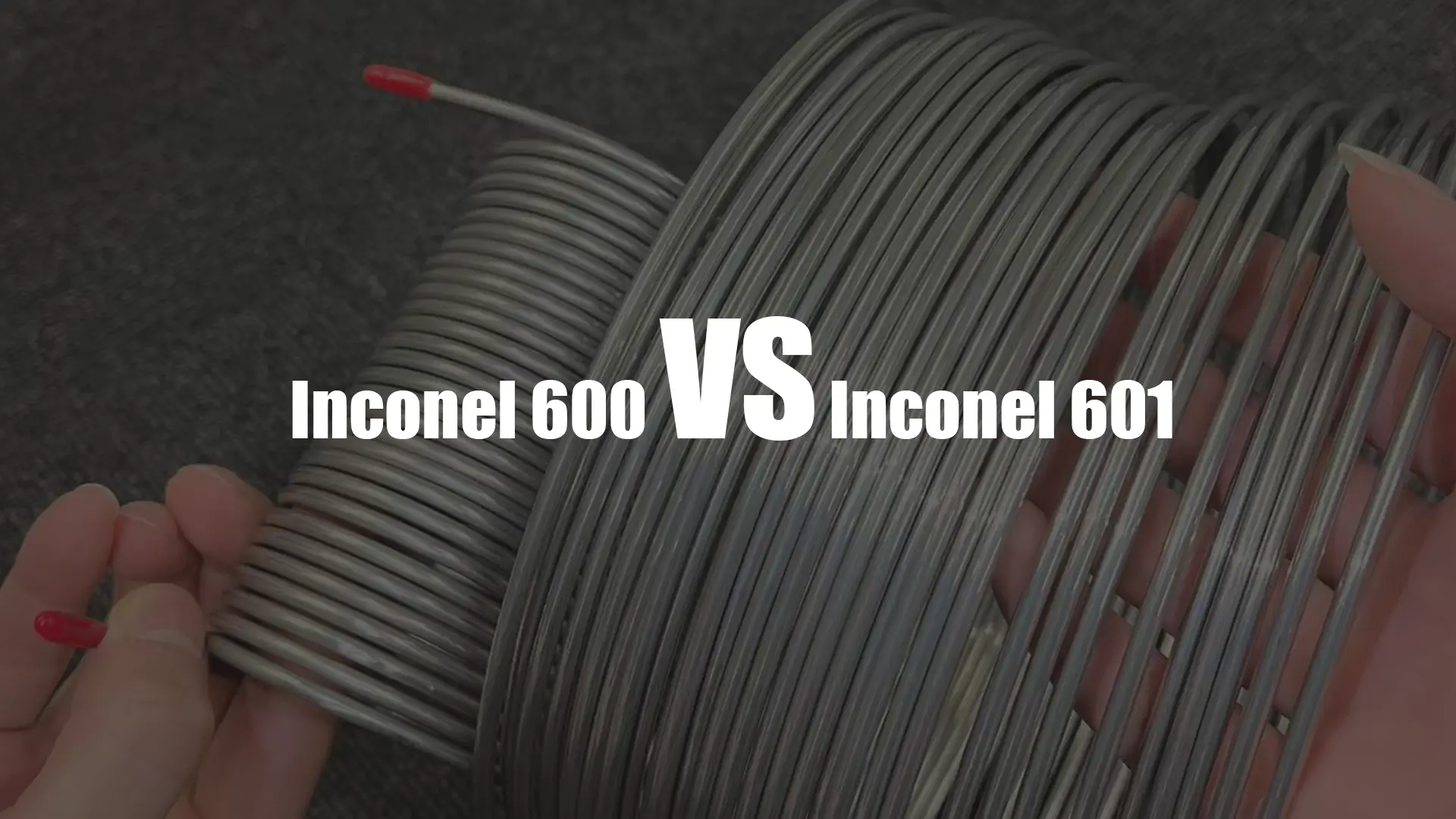
Overview of Inconel 600 and Inconel 601
Inconel Alloy 600 (UNS N06600 / W.Nr. 2.4816) is a classic nickel-chromium-iron superalloy designed for excellent corrosion resistance and mechanical stability at elevated temperatures. It combines a high nickel content with moderate chromium levels, resulting in a material suited for oxidation, reducing environments, and corrosion-prone applications.
Inconel Alloy 601 (UNS N06601 / W.Nr. 2.4851) builds on this foundation by increasing the chromium content and adding aluminum, which significantly enhances oxidation resistance at very high temperatures. Inconel 601 is engineered for environments involving extreme heat, frequent thermal cycling, and severe oxidative exposure.
In practical terms, both superalloys fall under the broader Inconel family and are widely used in aerospace, petrochemical, power generation, and thermal processing industries. But differences in composition translate into distinct strengths and limitations that influence material selection.
Inconel 600 VS Inconel 601: Chemical Composition
The chemical makeup of a superalloy dictates its core capabilities. Below is a simplified comparison of the primary elements in Inconel 600 and Inconel 601:
| Element | Inconel 600 | Inconel 601 |
|---|---|---|
| Nickel (Ni) | ~72 % | 58–63 % |
| Chromium (Cr) | 14–17 % | 21–25 % |
| Iron (Fe) | Balance | Balance |
| Aluminum (Al) | ~0 % | 1.0–1.7 % |
| Carbon (C) | ≤ 0.15 % | ≤ 0.10 % |
| Other Elements | Si, Mn, S (controlled) | Si, Mn, S (controlled) |
Two key observations emerge from this composition:
- Nickel content is higher in Inconel 600, which enhances broad corrosion resistance, especially in reducing environments.
- Chromium and aluminum contents are higher in Inconel 601, driving superior oxidation resistance at extreme temperatures.
This addition of aluminum in Inconel 601 promotes the formation of a stable aluminum oxide (Al₂O₃) layer on the surface at high temperatures. This protective film significantly improves the alloy’s resistance to further oxidation and thermal degradation—especially above 1000 °C (1832 °F).
Oxidation and Corrosion Resistance
One of the defining comparisons for Inconel 600 VS Inconel 601 lies in how each alloy resists oxidation and corrosion:
Inconel 600 Oxidation and Corrosion
Inconel 600 forms a chromium-rich oxide film (primarily Cr₂O₃) on its surface that resists high-temperature oxidation, carburization, and corrosion in a wide range of environments. It is well-suited for industrial systems where oxidation is moderate and temperatures are elevated but not extreme.
However, beyond approximately 925 °C (1700 °F), the chromium oxide layer begins to lose stability and degrade, leading to accelerated oxidation if operated continuously at very high temperatures. This limits Inconel 600’s maximum service temperature in harsh oxidative environments.
Inconel 601 Oxidation and Corrosion
With a significantly higher chromium content and the addition of aluminum, Inconel 601 outperforms Inconel 600 in high-temperature oxidation resistance, especially in environments exceeding 1000 °C. The aluminum facilitates the formation of a tightly adherent Al₂O₃ layer that remains stable and protective even after prolonged exposure to cyclic heat and cooling.
This makes Inconel 601 ideal for oxidative atmospheres such as combustion chambers, heat-treatment furnace components, and thermal processing rigs where temperatures are consistently high.
Corrosion in Chemical Environments
When it comes to general corrosion — particularly in reducing atmospheres (e.g., acid environments or chloride-rich conditions) — Inconel 600’s higher nickel content often delivers superior performance due to nickel’s inherent corrosion-resistant nature. In some aggressive chemical applications, this can make Inconel 600 a more cost-effective and resilient choice.
In contrast, Inconel 601’s corrosion resistance is generally good but is principally optimized for high temperatures and oxidation rather than some corrosive chemical media.
Mechanical Properties and High-Temperature Behavior
Both Inconel 600 and Inconel 601 are solid solution strengthened alloys with excellent mechanical performance, but differences exist in how they react to temperature and mechanical loads.
Strength at Elevated Temperatures
Inconel 601 typically exhibits slightly higher tensile and yield strengths at elevated temperatures compared to Inconel 600, thanks to the additional alloying elements that improve its stability under thermal stress. This enhanced tensile performance is especially valuable in applications where mechanical loads persist at very high temperatures.
Despite these differences, both alloys maintain good ductility and toughness across a wide range of temperatures, which makes them adaptable for engineering designs requiring reliable service in fluctuating thermal conditions.
Oxidation-Induced Creep and Thermal Cycling
In addition to oxidation resistance, Inconel 601 provides improved resistance to creep deformation (slow, permanent deformation under stress at high temperatures) compared to Inconel 600. This characteristic makes Inconel 601 a preferred choice in components subjected to sustained high heat and stress, such as radiant tubes and furnace fixtures.
Both alloys exhibit good fatigue properties, but Inconel 601’s stability over long service life in oxidative atmospheres can provide a longer operational lifespan under stringent conditions.
Physical and Fabrication Properties
The physical characteristics of Inconel 600 and Inconel 601 also show subtle differences:
- Density: Inconel 600 is slightly denser than Inconel 601, reflecting its higher nickel content.
- Thermal Conductivity: Both alloys have moderate conductivity, but specific values vary with temperature and alloy composition.
- Workability: Inconel 600 is generally considered easier to work and weld due to its more established use and processing methods. In contrast, Inconel 601 may require more controlled welding practices to avoid heat-affected zone (HAZ) issues, particularly in thick sections.
Typical Applications — Where Each Alloy Excels
Because Inconel 600 VS Inconel 601 serve different performance niches, their applications vary accordingly:
Inconel 600 Common Uses
- Chemical processing equipment where corrosion resistance is crucial
- Nuclear steam generator tubes and reactor components
- Heat exchangers and furnace components operating at moderate high temperatures
- Petrochemical infrastructure requiring balanced oxidation and corrosion resistance
Inconel 601 Common Uses
- High-temperature furnace parts, radiant tubes, and heat-treatment fixtures
- Combustion chambers and aerospace thermal structures
- Thermal oxidizing environments where oxidation resistance is primary
- Petrochemical cracking components and incinerators with repeated thermal cycles
In practice, engineers select between these two alloys based on specific variables such as maximum service temperature, oxidation severity, chemical corrosion factors, and economic considerations.
Cost Considerations
Due to its enhanced oxidation resistance and higher alloying content, Inconel 601 is typically more expensive than Inconel 600 on a per-kilogram basis. However, for applications involving sustained high temperatures and oxidation, the extended service life of Inconel 601 may justify the initial cost through reduced maintenance, downtime, and replacement frequency.
Conclusion: Inconel 600 VS Inconel 601 — Choosing the Right Alloy
The comparison between Inconel 600 VS Inconel 601 highlights that while both materials are robust nickel-based superalloys suitable for high-temperature applications, their strengths lie in different performance domains:
- Inconel 600 excels where broad corrosion resistance, reducing environments, and balanced high-temperature performance are priorities. It remains a versatile and widely used engineering alloy with strong mechanical properties and reliable fabrication ease.
- Inconel 601 is optimized for extreme oxidative conditions and high operating temperatures, thanks to its heightened chromium and aluminum content. This gives it superior oxidation resistance and better performance in cyclic thermal environments, albeit at a higher cost.
Pingback: tadalafil muscle cramps
Pingback: cialis together
Pingback: vidalista side effects
Pingback: vidalista or cenforce
Pingback: cenforce viagra 100mg
Pingback: kamagra online usa
Pingback: goodrx sildenafil 100mg
Pingback: loperamide heart issues
Pingback: udenafil tablets
Pingback: domperidone medicament
Pingback: revatio vs cialis
Pingback: dutasteride reddit ph
Pingback: sémaglutide oral
Pingback: finpecia tablet uses in tamil
Pingback: topical minoxidil dosage
Pingback: semaglutid mounjaro
Pingback: semaglutid spritze anwendung
Pingback: tadalafil bdnf
Pingback: rogaine for eyebrows
Pingback: can doxycycline cause eye infection
Pingback: flagyl tablet 500 mg metronidazole
Pingback: sildenafil past expiration date
Pingback: cialis drug class
Pingback: minoxidil sperm reddit
Pingback: acyclovir and penciclovir
Pingback: bupropion hcl vs bupropion hbr
Pingback: orlistat products
Pingback: ketoconazole cream for fungal rash
Pingback: terbinafine dosage article
Pingback: terbinafine pharmacology
Pingback: toradol migraine guide
Pingback: toradol pain relief onset
Pingback: toradol short term instructions
Pingback: ivermectin rosacea patient outcomes
Pingback: sildenafil absorption delay
Pingback: sildenafil legitimacy check
Pingback: sildenafil country of origin pricing
Pingback: vardenafil 10 mg profile
Pingback: unstable blood pressure warning
Pingback: vardenafil mode of action
Pingback: vardenafil onset factors
Pingback: vardenafil risk signals
Pingback: insurance coverage clarification
Pingback: orlistat side effect monitoring
Pingback: augmentin vs amoxicillin for otitis
Pingback: penicillin allergy symptoms list
Pingback: pneumonia lung inflammation
Pingback: sinusitis medical reference
Pingback: Pharmacokinetic Onset Concepts
Pingback: sildenafil compared to tadalafil
Pingback: Sildenafil vs Avanafil Pharmacology
Pingback: Tadalafil Duration Comparison
Pingback: approved sildenafil indications
Pingback: tadalafil clinical information
Pingback: tadalafil product names
Pingback: TadalafilCentral ED guide